NFPA 72 & NC Fire Code: What Your Custom Fire Alarm System Design in Elroy, NC Must Include

Understanding NFPA 72 and the NC Fire Code can save building owners in Elroy, NC, from costly compliance failures and life-safety risks. If you are planning custom fire alarm system design in Elroy, NC, for a commercial property, warehouse, retail space, or industrial facility, knowing which standards apply before the first wire is run may be the most important step in your project.
What NFPA 72 Requires for Commercial Fire Alarm Design
NFPA 72 is the primary standard governing the design, installation, inspection, testing, and maintenance of fire alarm systems in the United States. The building or fire code determines when a system is required; NFPA 72 specifies how that system must be built.
A commercial fire alarm system is a life safety system designed around the building, occupancy type, detection requirements, notification needs, monitoring path, documentation, and inspection process. Every compliant design must reflect these requirements before any equipment is specified.
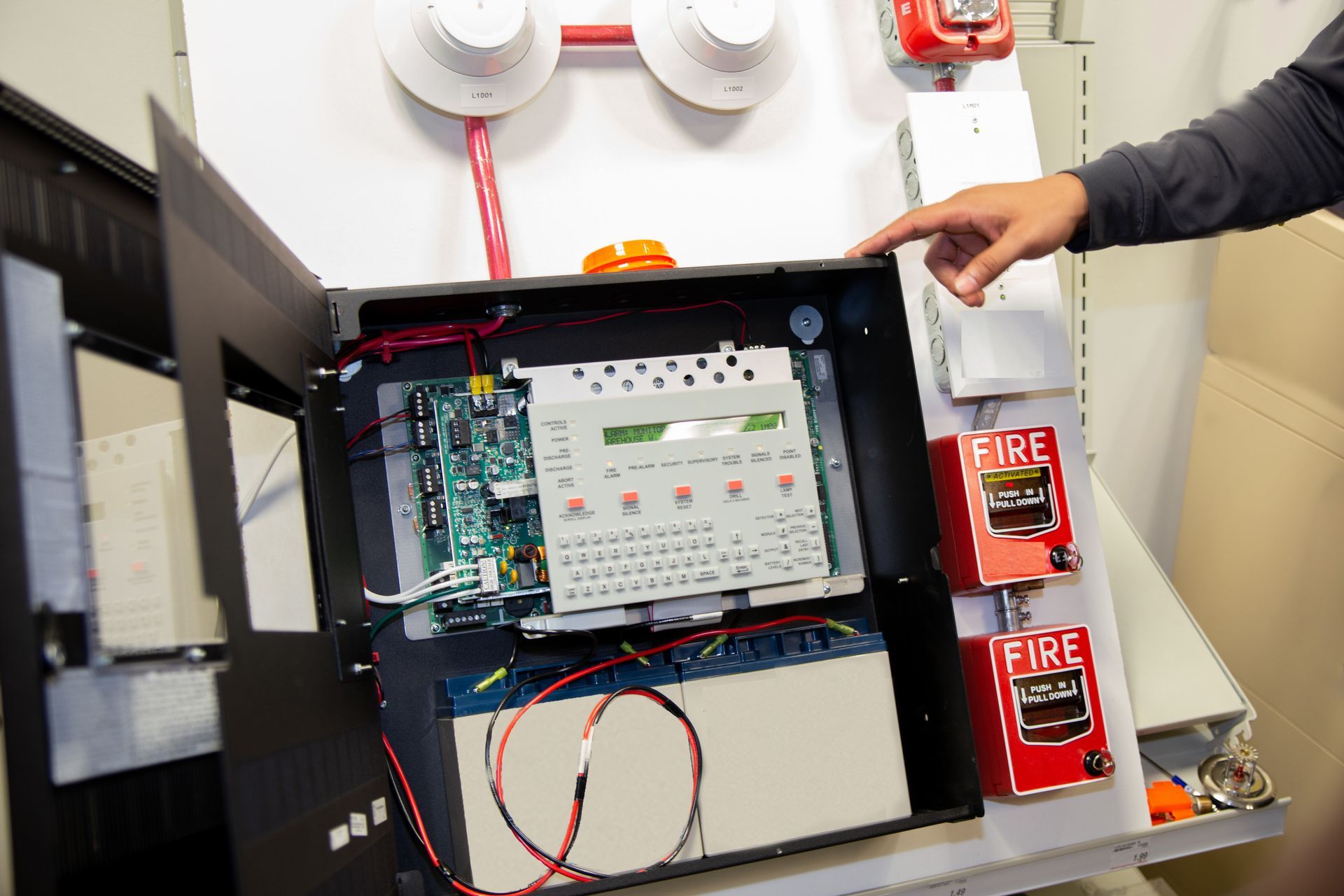
Key elements NFPA 72 addresses in a compliant design include smoke detectors on every floor and in each exit, hallway, and stairway; a reliable primary power source plus battery or generator backup; specific requirements for pull stations, heat detectors, notification devices, and control panels; and detailed recordkeeping for all inspections, tests, and maintenance activities.
Failure to comply can result in fines, legal action, shutdowns, increased liability, and insurance claim denials.
How the NC Fire Code Applies to Elroy Buildings
The NC Fire Code adds a state-level layer on top of NFPA 72 that every Elroy property owner must account for. The 2024 North Carolina State Building Code includes the 2024 North Carolina Fire Code, which governs fire safety statewide.
Before construction permits can be obtained, the Fire Marshal's Office must review plans to confirm that life safety codes have been addressed. All new construction commercial buildings' fire suppression systems and fire alarm systems require a permit. A properly executed custom fire alarm system design accounts for this plan review step from the earliest stages of the project.
Elroy is a census-designated place in Wayne County, meaning the Wayne County authority having jurisdiction (AHJ) may apply its own plan review and inspection requirements on top of state minimums. Always confirm local AHJ requirements before submitting plans.
Addressable vs. Conventional Systems: Which Fits Your Building?
Choosing the right system type is a core part of any custom fire alarm system design, and the choice depends on building size and complexity.
Conventional systems partition a building into zones along a circuit. During an alarm, the panel identifies the zone but not the specific device that triggered it. Conventional systems are cost-effective for smaller, straightforward facilities.
Addressable systems use a signaling line circuit and can identify the exact device that triggered the alarm, monitor device state, and pinpoint a fire's precise location so emergency responders can act faster. Multi-zone manufacturing facilities, warehouses, and mixed-use commercial buildings in the Elroy and Wayne County area typically benefit most from addressable systems. Selecting the correct system type early can reduce response times and limit property damage.
The Design-to-Inspection Timeline
A compliant fire alarm project in Wayne County moves through several stages.
Understanding the sequence prevents delays:
- Site Assessment: System design must reflect the building's layout, size, occupancy type, and fire hazards. This is where device placement, wiring paths, and monitoring strategy are mapped to the specific structure.
- Plan Submittal: Plans are reviewed by the local AHJ and must reflect code-compliant device placement, wiring, and monitoring paths. Incomplete submittals delay approval.
- Permit Issuance: Work may not begin until the permit is issued and approved plans are on site.
- Installation and Testing: After work is completed, an inspector verifies that the system complies with approved plans and applicable codes.
- Documentation: The installing contractor must furnish a written statement of compliance and record of completion forms to the code official.
What NFPA Standards Apply to Fire Alarm Design in NC?
NFPA 72 is the core standard governing fire alarm system design in North Carolina. The NC Fire Code references NFPA 72 for technical implementation. Exact requirements vary based on occupancy type, building size, and AHJ requirements. Any custom fire alarm system design must align with both the applicable NFPA 72 edition and the NC Fire Code to achieve a compliant, approvable submittal.
What Questions Should You Ask Your Fire Alarm Designer?
- Is this design based on the current NC Fire Code and applicable NFPA 72 edition?
- Have you coordinated with the Wayne County AHJ on plan review requirements for Elroy buildings?
- Does the design account for my occupancy type, building size, and future expansion?
- What monitoring path and backup communication are included?
- What does the inspection and testing record package look like at project close-out?
A provider experienced in custom fire alarm system design should answer each question clearly and provide documentation before work begins.
Work With a Provider Serving Elroy, NC
Getting fire alarm compliance right the first time protects people, avoids rework, and keeps your Wayne County building open and operating. The right provider will assess your building, match the system type to your occupancy, coordinate plan review with the AHJ, and remain on site through acceptance testing.
Carolina Phone & Alarms, Inc. has served Eastern and Central North Carolina since 1978, offering custom fire alarm design and installation built to meet strict fire codes.
Contact the team today to get started.